Established on November 8, 2011, the Vietnam Museum of Literature houses a vast collection of documents regarding literary works and memorabilia associated with renowned writers.
Showcasing Vietnam’s distinctive literary heritage
The Vietnam Museum of Literature officially opened to the public on June 26, 2015. It was built on the former site of the Quang Ba School of Writing, a place that holds many memories of the nation’s celebrated writers and poets. It is one of the few literature-focused museums in the region. The museum plays a vital role in researching, collecting, preserving, and exhibiting the nation’s literature, as well as providing educational opportunities.
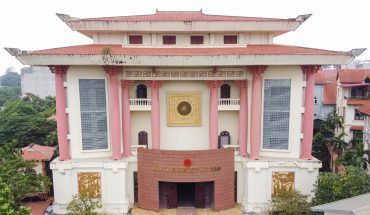
Visitors will be impressed by the museum’s expansive 3,600-square-meter space, which displays over 4,000 artifacts and documents. The museum features two main exhibition areas. The outdoor section introduces Vietnamese folk literature, brought to life through ceramic reliefs and a collection of 20 statues depicting literary figures from the ancient and medieval periods.
The indoor exhibition spans three floors and houses tens of thousands of artifacts. This section chronicles the history of Vietnamese literature from the Ly Dynasty to the present day. It features a wealth of materials and artifacts related to Vietnamese writers, with each item telling an authentic story about the lives and careers of these literary figures. The Museum’s Three Exhibition Floors
The Vietnam Museum of Literature spans three exhibition floors. The first floor houses artifacts from ancient and medieval times. Centrally displayed on the wall is a classic verse from The Tale of Kieu: “The heart’s virtue outweighs talent threefold.” In front of it stands a pen-nib-shaped stone brought from the Hung Kings’ Temple. This floor also showcases the history of the nation’s writing systems across various materials, such as do paper, fabric, metal, and wood. The space recreates scenes of scholars traveling to take imperial examinations and the triumphant return of a top laureate to his home village.
The second floor features artifacts and documents related to prominent figures in early 20th-century Vietnamese literature—such as Phan Boi Chau and Tan Da—as well as later writers like Nam Cao, Ngo Tat To, Te Hanh, and Nguyen Hong. The third floor is dedicated to writers who received the State Award for Literature and Arts, covering the era of resistance against French colonialism, literature from Zone V and South Central Vietnam, and works from both the North and the South. This floor also houses a statue of the great poet Rabindranath Tagore (1861–1941).
Among the nearly 4,000 documents and artifacts at the museum, some are truly unique. These include the wooden desk where the writer Nguyen Du once sat to write; a statue of King Tran Nhan Tong from his time at Yen Tu Mountain in the 13th century; and the mahogany table and chair set Uncle Ho used when receiving King Bao Dai in 1946. Each artifact tells a vivid story, making the museum a compelling destination for lovers of Vietnamese literature.
Address: 275 Au Co, Quang An, Tay Ho District, Hanoi.
